
Why the Iran Conflict Pushed Mortgage Rates Higher
How the Iran Conflict Is Impacting Mortgage Rates (And Why It Matters for Homebuyers)
Geopolitical events don’t just stay overseas—they ripple directly into U.S. mortgage rates. The recent conflict involving Iran is a perfect example of how global instability can quickly shift borrowing costs here at home.
Let’s break down what’s happened, where rates are today, and—most importantly—why this is happening.
What Has Happened to Mortgage Rates?
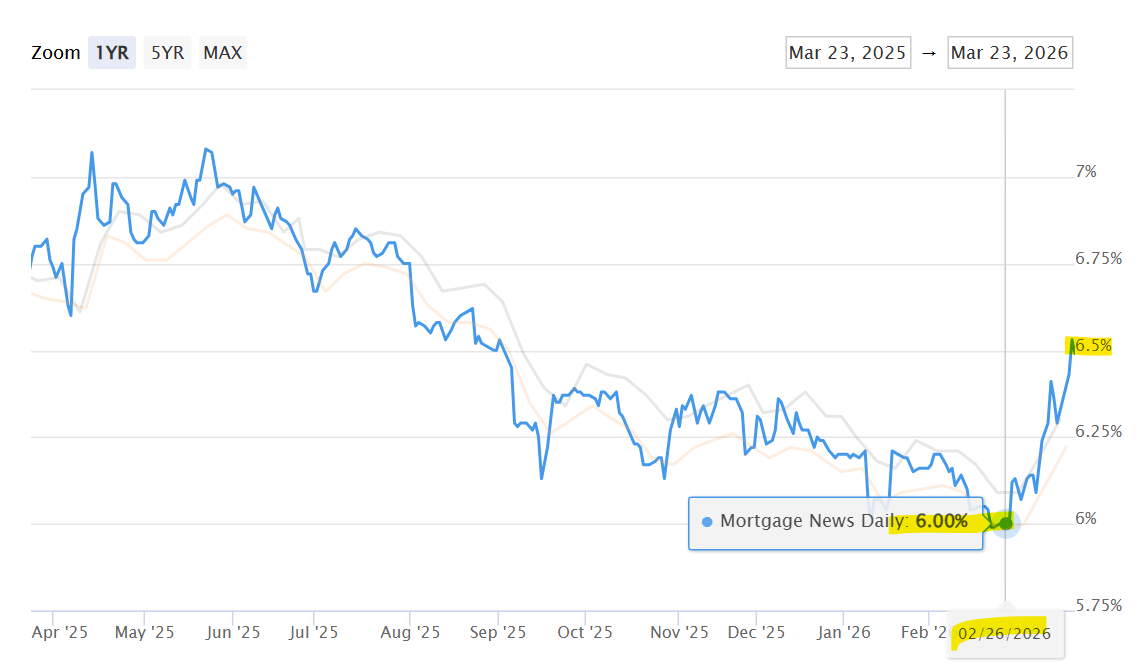
Since the conflict escalated in late February 2026, mortgage rates have moved noticeably higher after briefly trending down.
Just before the conflict, 30-year fixed rates dipped to around 5.98%
Within weeks, rates climbed into the 6.2%–6.4% range
Some projections now suggest a potential range as high as 6.5%–6.75% if tensions persist
In simple terms: We were knocking on the door of sub-6% rates… and then geopolitics kicked that door shut (for now).
The Core Reason: Mortgage Rates Follow the Bond Market
Mortgage rates are heavily tied to the 10-year U.S. Treasury yield, not directly to the Fed.
When the Iran conflict escalated:
The 10-year Treasury yield jumped from ~3.9% to over 4.3%+
Mortgage rates followed almost immediately
Why? Because investors demand higher returns (yields) when risk and inflation increase.
The Real Driver: Oil → Inflation → Rates
This is the most important chain reaction:
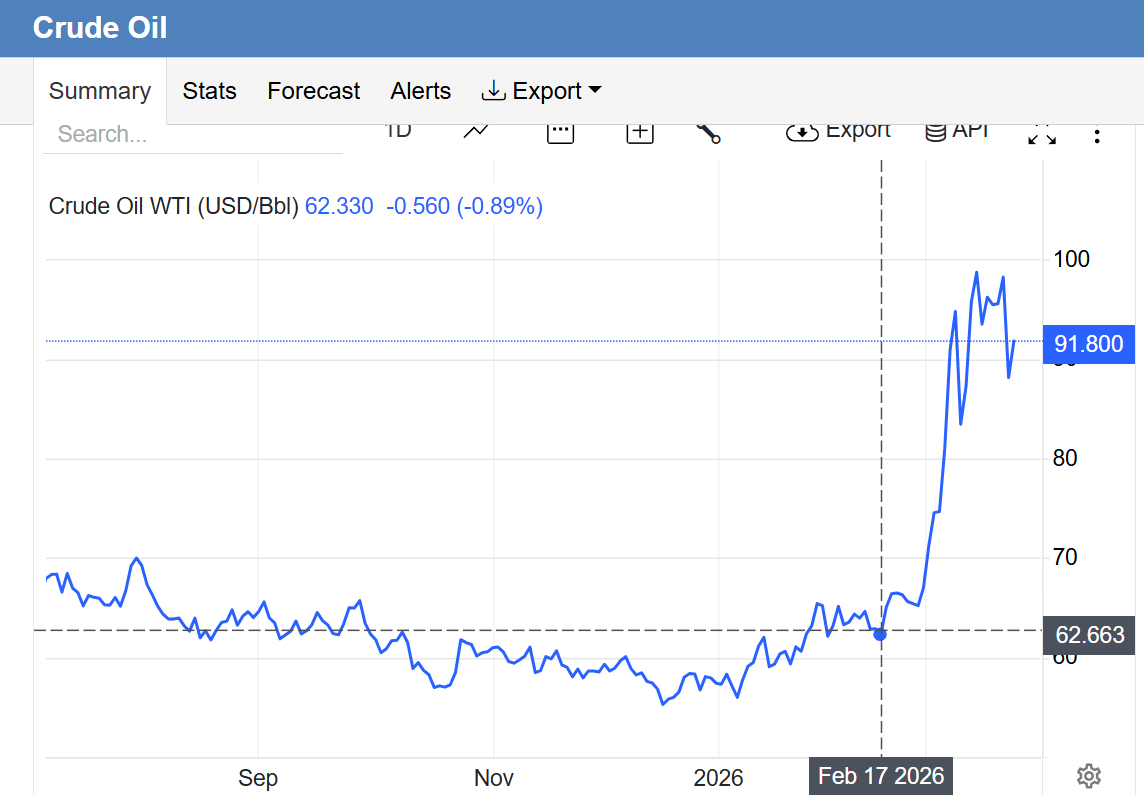
1. Conflict disrupts oil supply
The Strait of Hormuz—one of the world’s most critical oil routes—has been heavily impacted, pushing oil prices near $100 per barrel
2. Oil prices drive inflation
Higher energy costs increase:
Gas prices
Transportation costs
Goods and services across the board
3. Inflation pushes rates higher
When inflation expectations rise:
Bond investors demand higher yields
Treasury yields increase
Mortgage rates rise alongside them
Why This Time Is Different (And Important)
Typically, during global conflict:
Investors move money into U.S. bonds (a “safe haven”)
This would normally lower mortgage rates
But this time, something different happened:
Inflation fears from oil prices outweighed the “flight to safety” effect
Result: yields went up instead of down
That’s why rates increased, not decreased.
The Federal Reserve’s Role
The Fed doesn’t directly control mortgage rates—but it influences them.
Right now:
The Fed is holding rates steady around 3.5%–3.75%
Expectations for rate cuts have dropped significantly due to inflation risk
Translation: Lower mortgage rates are harder to achieve when inflation is back on the table.
What This Means for Homebuyers
Here’s the practical takeaway:
1. Rates are being driven by global events—not just the U.S. economy
Even if domestic data improves, global instability can override it.
2. Volatility is the new normal
Rates may move quickly based on headlines—not just economic reports.
3. Timing the market is nearly impossible
Rates moved ~0.30%+ in a matter of weeks
That’s a strong reminder: Waiting for the “perfect rate” can backfire fast.
What Happens Next?
There are two main paths forward:
Scenario 1: Conflict de-escalates
Oil prices stabilize
Inflation fears ease
Mortgage rates could drift back toward the high 5% range
Scenario 2: Conflict continues or worsens
Oil stays elevated
Inflation remains sticky
Mortgage rates could stay in the mid-6% range or higher
Final Thoughts
The Iran conflict has had a clear and immediate impact on mortgage rates—not because of politics directly, but because of how it affects:
Oil prices
Inflation expectations
Bond markets
And ultimately:
Mortgage rates are a byproduct of global economic confidence.
Right now, that confidence is being tested.